What is TMS and Who Can Benefit?
What is TMS and Who Can Benefit?
If you have been treated for depression and still do not feel like yourself, it can be discouraging to hear that the next step is another medication trial.
Medication can be valuable. It is also reasonable to ask what other treatments are available.
One option is transcranial magnetic stimulation, or TMS. Here is how I explain it—and the questions I encourage people to ask before considering treatment.
What does TMS actually do?
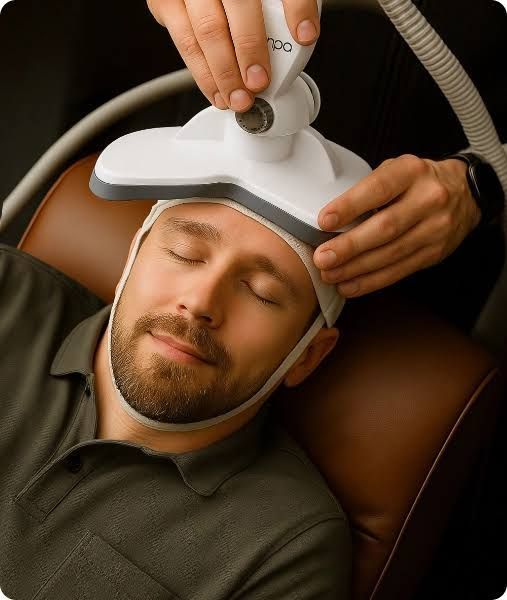
TMS uses a magnetic coil placed against the scalp to deliver pulses that stimulate targeted areas of the brain. For depression, treatment focuses on regions connected to networks involved in mood regulation. It does not require surgery or anesthesia, and you remain awake during treatment.
Who might consider it?
TMS may be worth discussing when depression and/or anxiety have not improved sufficiently with psychiatric medication treatment. Trouble tolerating medication can also be part of that conversation. TMS is FDA approved to treat Depression, Depression with Anxiety, OCD, and PTSD for patients 15-99 years old.
An evaluation should review the diagnosis, previous treatments, current medications, and medical history. Safety screening includes questions about seizures, implanted devices, and metal near the treatment area. Eligibility depends on the specific device and treatment being considered.
What does treatment feel like?
People commonly describe tapping against the scalp. There may be scalp or facial muscle movement during the pulses.
TMS can be uncomfortable. Headache and discomfort at the treatment site are common side effects, and seizures are a rare but serious risk. I want patients to tell the treatment team what they are feeling so comfort and safety can be addressed throughout care.
“Noninvasive” should never be interpreted as “you won’t feel anything.”
How much time does it take?
Conventional TMS typically involves appointments on weekdays over several weeks. Some treatments use shorter stimulation sessions. Accelerated approaches deliver multiple sessions in a day, but schedules, supporting evidence, and device clearances differ. A shorter calendar does not automatically make one approach the best choice for everyone.
Before starting, ask for the complete schedule—including the time between sessions—and an explanation of the evidence for the proposed protocol.
What should you expect from the conversation?
I encourage patients to ask:
- Why are you recommending this treatment for me?
- What improvement is realistic, and how will we measure it?
- What are the risks and alternatives?
- What happens if I improve only partly—or do not improve?
- What follow-up might I need afterward?
TMS can be a useful option for depression, but no responsible clinician can promise an individual outcome.
At Mental Health 2 You, my goal is to make that discussion understandable and useful. If you are curious about TMS, an evaluation can help us decide whether it belongs in your treatment plan.
*Dr. Sarah Parsons is a psychiatrist at Mental Health 2 You in Louisville, Kentucky. This article provides general education and does not replace an individual medical evaluation.*