Therapy for OCD
Therapy for OCD: What Makes ERP Different?
Therapy for OCD: What Makes ERP Different?
By Dr. Sarah Parsons
When people hear “OCD,” they often think about cleaning or organizing. But obsessive-compulsive disorder can involve distressing doubts, unwanted thoughts, repeated checking, or rituals that other people never see.
Compulsions can be mental, too—such as silently repeating words or counting. These symptoms can consume time and interfere with daily life.
One treatment I want people to know about is exposure and response prevention, usually called ERP.
Why temporary relief can become a problem
Imagine feeling a strong urge to check something again, even though you have already checked it.
Checking may bring relief. But then doubt returns, and you feel compelled to repeat the process.
That experience can be exhausting. Knowing that a ritual is excessive does not necessarily make it easy to resist. Many people with OCD recognize this tension and feel frustrated with themselves.
As a psychiatrist, I want to approach that struggle with curiosity and respect. Shame makes it harder to talk openly about symptoms.
What happens in ERP?
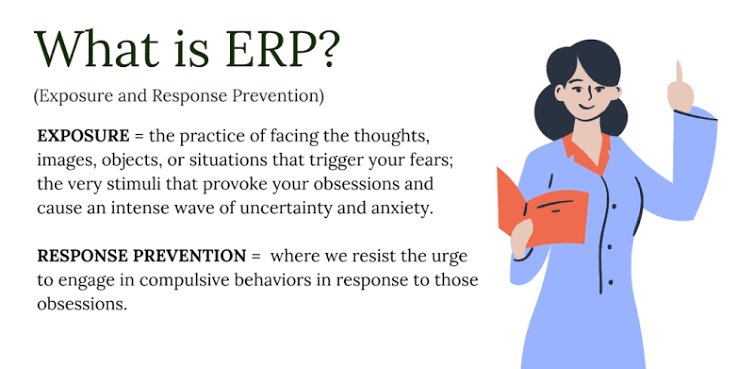
ERP is a specific form of cognitive behavioral therapy. With professional guidance, a person gradually encounters situations that trigger obsessions while practicing refraining from the usual compulsive response. Research supports ERP as an effective treatment for OCD.
For example, a therapist might help someone work toward leaving home without repeatedly returning to check a lock. The exercise would be chosen as part of an individual treatment plan.
The “response prevention” part matters: treatment involves practicing a different response to the urge to perform a ritual.
Ask how the treatment will work
The idea of exposure can sound intimidating. Before starting, you deserve a clear explanation of what your therapist recommends and why.
Questions I encourage include:
- What experience do you have treating OCD with ERP?
- How will we choose the first exercises?
- How will we address rituals that happen in my thoughts?
- What practice will I do between appointments?
- How will we measure progress?
Tell your therapist what concerns you about treatment. Those concerns belong in the planning conversation.
What if I have already tried therapy?
Your previous therapy may have helped with important parts of your life. It is still useful to ask whether it specifically included ERP.
For OCD, the type of therapy matters. Treatment may involve ERP, medication, or a combination, depending on the person’s needs and preferences.
I would want to understand what you tried, how consistently you could participate, what improved, and what remained difficult before deciding on the next step.
You can begin with an honest conversation
You do not have to describe every symptom perfectly at a first appointment.
“I have thoughts and rituals that are taking over more of my day” is enough to begin. So is, “I’m embarrassed to talk about this, but I think I need help.”
My goal is to help you understand what is happening and connect you with treatment suited to your symptoms. OCD deserves thoughtful, specific care.
Dr. Sarah Parsons is a psychiatrist at Mental Health 2 You in Louisville, Kentucky. This article provides general education and does not replace an individual medical evaluation.